"Far North" - north of the Arctic Circle – above
the latitude 66°33′44″ North,
the remote wilderness of Brooks Range to Arctic Ocean – an area I have found fascinating
for over 10 years since my first summer in Alaska. This part of Alaska is the land of the
midnight sun - sun stays above the horizon for 24 hours at the summer solstice,
vegetation grows fast under the perpetual light, and wildlife - bears, caribou,
moose, and wolves are always busy feeding and reproducing during the short
summer. The only road across the remote Arctic is the 414 mile Dalton Highway
from Fairbanks via Steese Hwy and Elliot Hwy, a total of 500 miles to Prudhoe
Bay (Arctic Ocean), 850 miles from Anchorage!


In mid August, while it was still late summer in Anchorage,
my journey to Arctic began. Passing
through Fairbanks, 350 miles from Anchorage, the fall was already
starting! The birch woods were turning
to yellow. 84 miles from Fairbanks, the Dalton
Hwy started with dirt road and a lot of construction. After crossing the Yukon River, the highway
follows the pipeline to the north. The
Birch woods changed to the land of permafrost with boreal forest. The open tundra was already a golden fall
color when I entered the Arctic Circle.
Countless rivers and lakes lay scattered across the open valley.
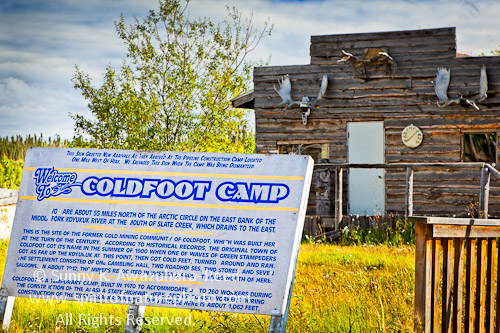
The historic gold rush town Coldfoot is now a big truck stop
for huge trucks which heading to/from North Slope oilfield. This is a last place for gas and supplies
until Deadhorse, on the north end of Dalton Hwy.
The highlight of the Dalton Highway is north of Coldfoot; the
spectacular Brooks Mountains begin. Gate of Arctic National Park &
Preserve, Arctic National Wildlife Refuge, and some other protected lands are laid
along the highway. The colors of the
tundra was vibrantly painted in orange and red, glowing in the nearly
everlasting autumn sun.
Crossing Atigun Pass, the rivers north of the pass flow into
the Arctic Ocean, and the rivers in the south flow into the Pacific Ocean. The
dramatic scenery - rugged mountains and tundra valley continues on.
It was an emotional moment when I finally saw the edge of
Arctic National Wildlife Refuge after signing so many petitions to protect this
pristine remote land from oil development for the past years. When I first heard about this area and the
issue, I was still young, maybe a teenager in Japan, but I was strongly moved
and felt pain for the political issue.
Finally I was there, seeing the evening light shine down upon the rugged
mountains and the valleys from the Dalton Hwy... The landscape of the refuge is stunning. I
hope this area will be permanently protected for future.
Caribou crossing the tundra on north of Brooks Range.
The darkness of night lasts for at least a few hours... The northern lights start dancing the Arctic.
To be continued to the next posting...